Showing posts with label museum. Show all posts

Friday, October 23, 2015

Toledo, Spain

As I mentioned in my previous post, I decided to take a day trip to Toledo while I was in Spain. Toledo is known as the Imperial City because it had been the main venue of the Court of Charles I. It is also known as the City of Three Cultures because it was influenced by the historical co-existence of Christians, Muslims, and Jews. Unprecidented at the time, the city of Toledo allowed for mosques and temples to be built within the city and worshiped in. The phrase Holy Toledo comes from the city being considered a holy city for its religious tolerance.

Toledo also has a history of producing bladed weapons and metalwork which are now popular souvenirs of the city. In fact, many of the props from the Lord of the Rings series were made in Toledo.

The bridge leading into Toledo

Ruins that are being excavated outside the city.

I decided to take the train to Toledo. Having never used the European train system and not familiar with Spanish, I was a little nervous taking the train. It turns out I had nothing to worry about. The train system is extremely organized and efficient. Plus, it was fun to see the landscape from the train.

The Train Station at Toledo

I hired a private guide while I was in Toledo. I would definitely recommend hiring a guide. Toledo is a tourist town so the guides specialize in knowing all the interesting facts of Toledo. 

One of the alleys


Those indentations are from knives being sharpened on the walls. 

One of the first stops was the Toledo Army Museum. Situated in the old Alcazar fortress, it is a multi-floored museum showcasing weaponry and armory from different centuries in Spain's history.

One of the many interesting weapons.


A suit of armor for both horse and man

They are also excavating ruins within the museum.

Like many of the museums in Spain, this one takes about several hours to view everything. Unfortunately, I didn't have time to explore it entirely. It is amazing to see the different armory and weaponry.

My next stop was the Toledo Cathedral. Also known as the Primate Cathedral of Saint Mary of Toledo, it is considered by some authorities to be the magnum opus of Gothic Style in Spain.  It took over 200 years to build.

So gorgeous


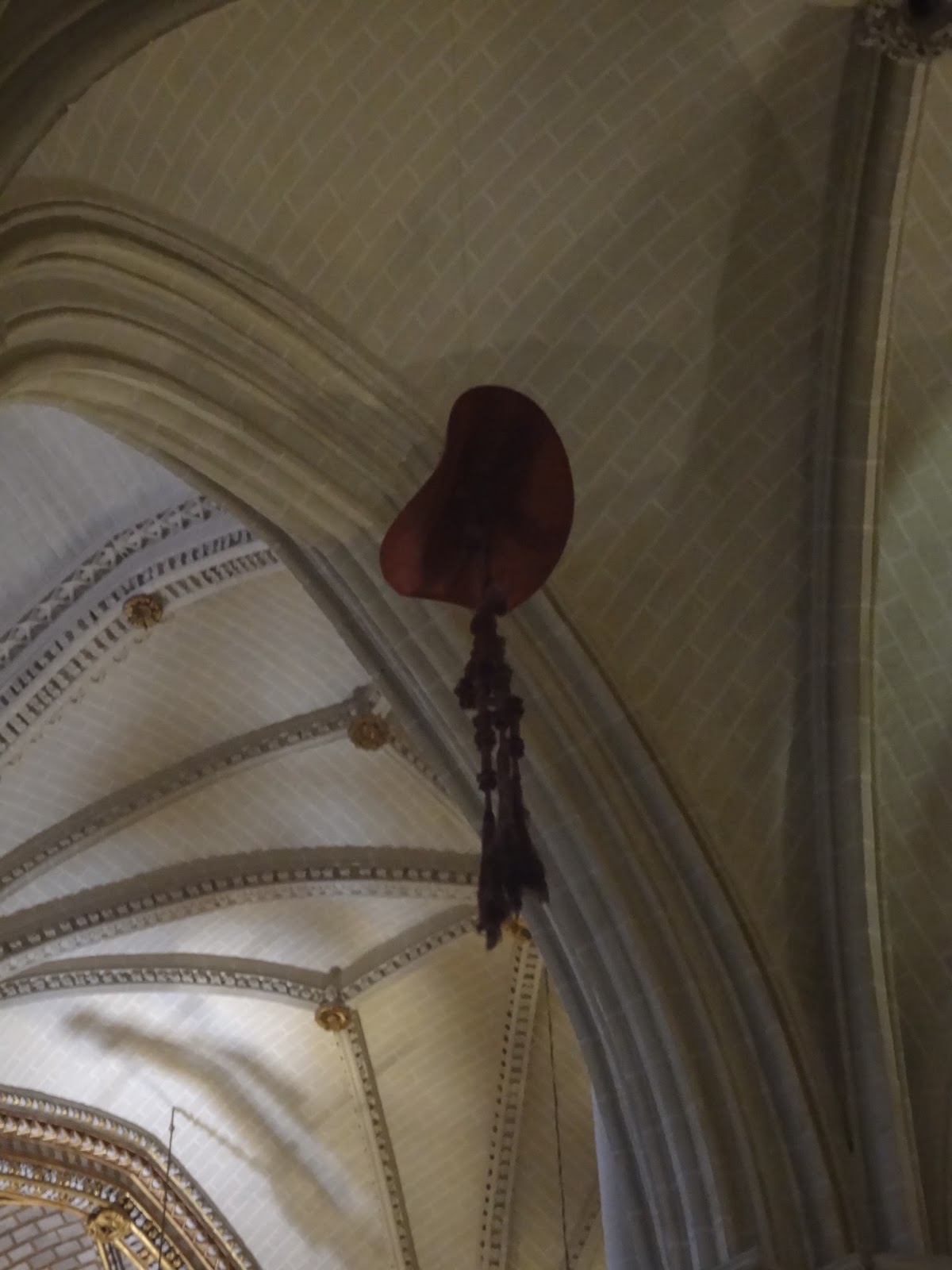
Each one of these hats hangs over the buried tomb of a Cardinal.


This is part of the ceiling.


The crown jewels


For an additional fee, you can go up to the top of one of the bell towers. Though the climb is steep and claustrophobic, it is definitely worth it.


A place where I rested as I made my ascent.

This bell is huge. It can fit five or six people underneath it.

View from the top of the bell tower.

The masterpiece, The Burial of the Count of Orgaz by El Greco, is located in the Iglesia de Santo Tome. Although pictures are not allowed, seeing this masterpiece in person is breathtaking.

Here are a few more photos from my tour in Toledo.


The Jewish Quarter. Written in English, Arabic, and Hebrew.

Inside a synagogue


El Greco died in Toledo. 

The Statue of Miguel de Cervantes. He's the writer of Don Quixote.

Lastly, I stopped at a restaurant and had some delicious gazpacho.

Toledo was an amazing trip. I wish I had more than a day to explore it. The blending of cultures and history has created a unique town worth exploring.

~A.E. Keener


Want to know more about my adventure? Follow the links below:

Toledo Army Museum: 
http://www.museo.ejercito.es/en/unidades/Madrid/ihycm/Museos/ejercito/index.html?__locale=en

Toledo Cathedral:
http://www.sacred-destinations.com/spain/toledo-cathedral


Sunday, May 25, 2014

An Update of the Past Few Months Part 1

It's been a while since I last updated the blog. I've been finishing my writing season a.k.a completing/ editing a novel, completing a screenplay, and lengthening a pilot.  With all that writing, whenever I had a break, I was too exhausted to update the blog.

That being said, I still have had several interesting adventures.

Both in February and April, I traveled to California. On the first trip, I visited Pasadena, Huntington Gardens, Reagan Library, and the Getty Center.

Pasadena is a city about 20-40 minutes (depending on traffic) from L.A.

A view of one of Pasadena's main streets.

It is also home of the Rose Bowl. It was under construction when I visited, but we were still able to view it from a distance.

Besides the Rose Bowl, Pasadena is also known for the Huntington Library, Art Collection, and Botanical Gardens. The Huntington is a private, nonprofit institution founded in 1919 by Henry E. Huntington. Henry Huntington built a financial empire which included railroad companies, utilities,  and real estate holdings in Southern California. He married his uncle's widow in 1913. His wife's fascination with collecting art and his collection of books led to what the Huntington is today. The Huntington also houses 14 gardens as well. The grounds were so extensive that we didn't have time to explore all of them.

Huntington Mansion has been converted into an art gallery. 

A statue from the statue garden.


A shot of one of the rooms.

Another shot of the rooms.

The famous Pinkie. An oil painting by Thomas Lawrence. His idealized portrayal of childhood led to international fame and iconic status.


The famous Blue Boy. An oil painting by Thomas Gainsborough. It was Gainsborough's mastery of brushwork and paint that lead to its fame.

One view of the Japanese Garden. There is a plaque in the garden that reads: In honor of the visit of Their Majesties The Emperor and Empress of Japan (June 21, 1994).

A view of the bridge in the Japanese Garden. 

Another view of the bridge. I love the reflection in the water.

From the Bonsai garden.  A Prostrate Juniper.

Another Bonsai. This one is an Olive Tree.

A Bamboo Forest

The Australian Garden

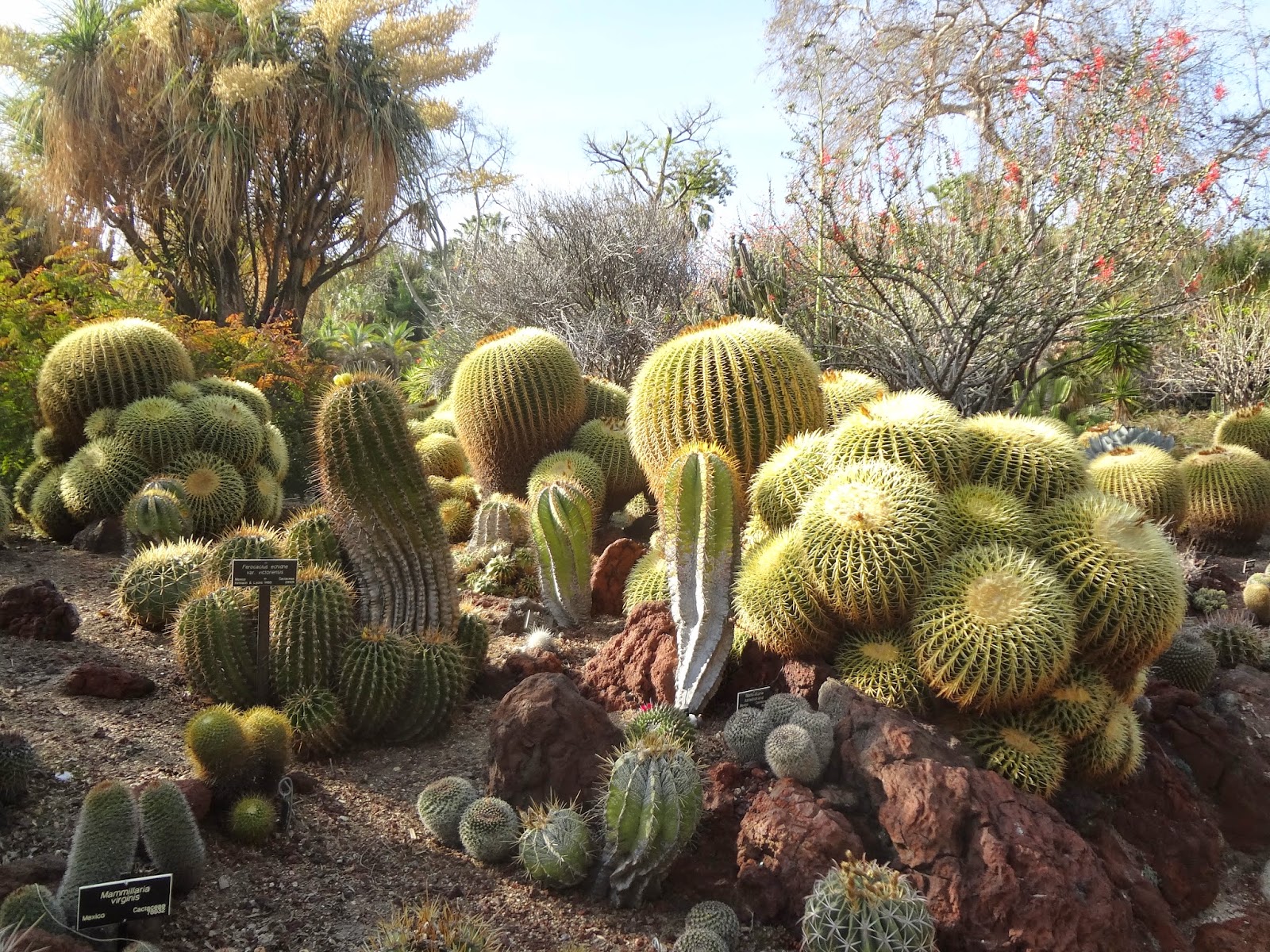
Cactus Garden

Chinese Garden

From the library. An original Gutenberg Bible. 

A first printing of The Canterbury Tales

Sidereus nuncius by Galileo Galilei. The illustrations shown here are the first ever made of the moon under magnification. This publication only had 550 copies. 

Speaking of libraries,  I decided to revisit the Reagan Library, one of 13 libraries sanctioned by the NARA Presidential Library Office.

The Reagan Library explores the life of America's 40th President, Ronald Reagan. The Library also has special exhibits during certain times of the year. When I went, they were having an exhibit on spies.


OSS Officers carried a smatchet (Smashing Hatchet for close combat during WW2)


Welbike used to get away quickly after landing behind enemy lines via parachute.


Assassination Umbrella. Used to deliver poison.


Child's Train. This unassuming toy is a concealment for a microdot lens.

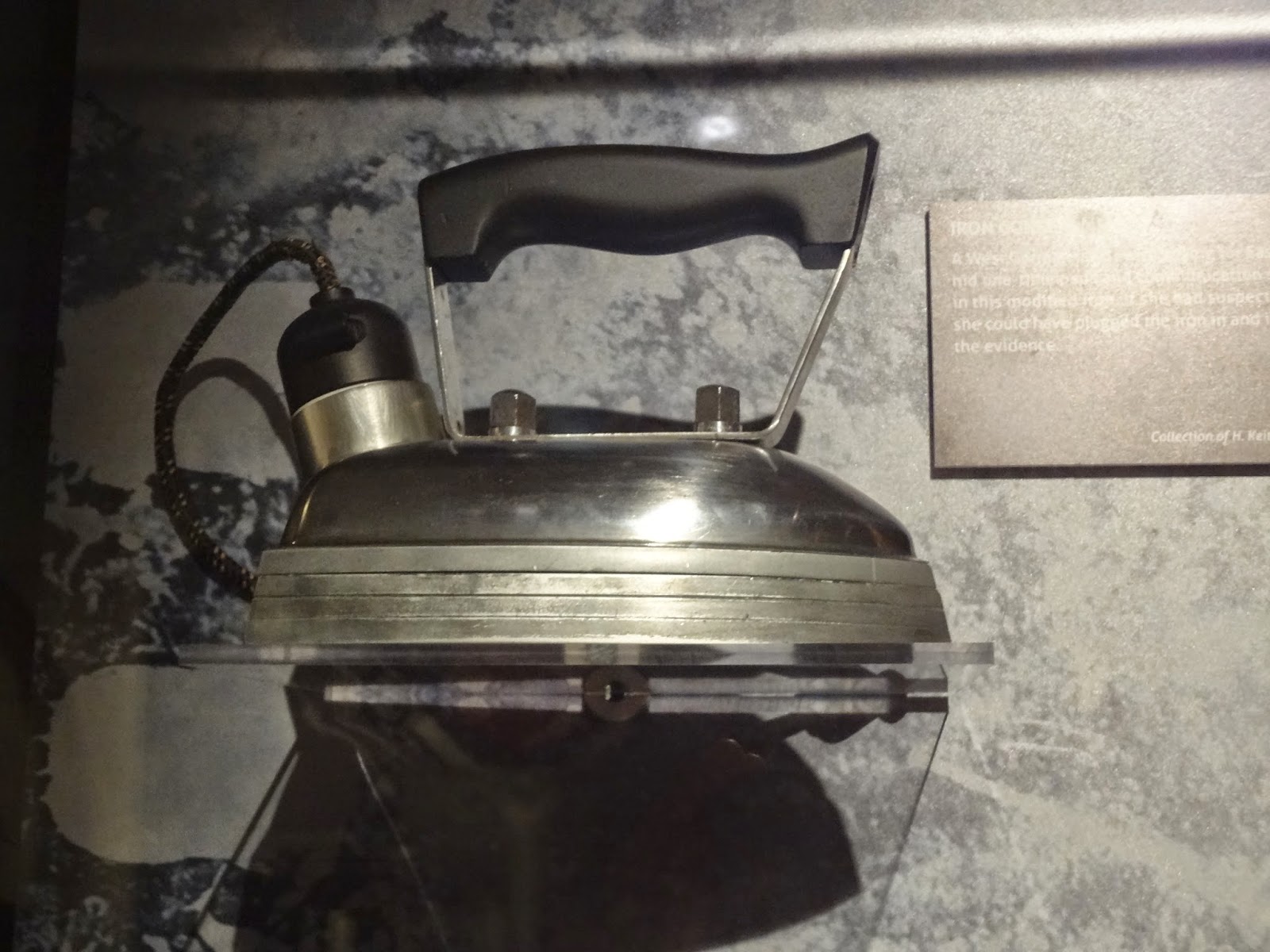
Who would think an iron would be related to spy work? This one was used by West German housewives spying for East Germany. It held one-time pads and communication schedules and could be used to incinerate evidence if the housewife thought she was in danger.


Invented in the 1970's by the CIA's Directorate of Science and Technology. It was the first miniaturized unmanned aerial vehicle.  


"Charlie" an unmanned underwater vehicle created by the CIA's Directorate of Science and Technology.

The final excursion of my February trip was the J. Paul Getty Museum. J. Paul Getty was an American Industrialist who created the Getty Oil Company. An avid collector of arts and antiquities, Getty founded the J. Paul Getty Museum. There were many beautiful works of art and antiquities. I've included pictures of some of my favorites below:

The Front of the Getty Museum

Irises by Vincent Van Gogh (1889)


Still Life with Flowers and Fruits by Claude Monet (1869)


Minerva sculpted by Joseph Nollekens (1775)

Dancer sculpted by Paolo Troubetzkoy (1912)


Bed circa 1775-1780. French. A grand bed meant for a deep niche in an important bedroom.

One of the rooms set up with furniture.

Planisphere Clock circa 1745-1749. It shows the astronomical knowledge of French scientists. The dials include the months and their zodiac signs, the days of the lunar month, and local times in various cities and parts of the world. Smaller dials show the phases of the moon, a tidal calendar for ports of northern France, the days of the week, and the eclipses of Io, one of the moons of Jupiter.

Even the gardens are artwork.

It was fun to go back to California again and explore some sites I never had a chance to visit. I'll continue with my second California adventure in my next blog.

~A.E. Keener

Interested in my adventure? Click on the links below to learn more:

Rose Bowl:

The Huntington Library, Art Collection, and Botanical Gardens:

The Reagan Library:

The J. Paul Getty Museum: